

Pitshanger Lane man and van tips for tight access moves in Ealing
Posted on 01/07/2026
If you are moving on or near Pitshanger Lane, you already know the problem: it is not always the load that causes stress, it is the access. A narrow driveway, parked cars, a tight turning point, a shared entrance, a small staircase, or a van that cannot sit exactly where you want it can turn a simple move into a slightly frantic one. These Pitshanger Lane man and van tips for tight access moves in Ealing are here to help you plan properly, keep the day calm, and avoid the classic "we'll just make it work" mistake that usually costs time.
The good news? Tight-access moves are very manageable when the route, vehicle size, packing, and timing are thought through in advance. In this guide, you will find practical, local advice for moving around Ealing with less hassle, whether you are shifting a few heavy items, an entire flat, or something more awkward like a piano or oversized wardrobe. There is a bit of local common sense here too, because frankly, Ealing roads can be friendly one minute and maddening the next.
For broader context on the area and how local living patterns shape moving needs, you may also find local opinions on life in Ealing and this guide to Ealing's balance of calm and city life useful reading.
![A man wearing a white shirt and black cap stands inside an open delivery van, holding a cardboard box and facing the camera. The van is filled with multiple cardboard boxes of various sizes, some wrapped in plastic or packing paper, stacked neatly inside the cargo area. The van is parked outdoors on a paved street with residential buildings visible in the background. The scene depicts a home relocation or furniture transport process, with a focus on the loading or unloading stage of a house removal. [COMPANY_NAME], specializing in removals, is involved in the logistics of this packing and moving operation, demonstrating the careful handling of items during a house move. The lighting is natural, highlighting the interior of the van and the boxes, emphasizing the logistics of tight access moves often encountered in property clearances or apartment relocations, consistent with the tips for tight access moves in Ealing across the [PAGE_TITLE].](/pub/blogphoto/pitshanger-lane-man-and-van-tips-for-tight-access-moves-in-ealing1.jpg)
Why Pitshanger Lane man and van tips for tight access moves in Ealing Matters
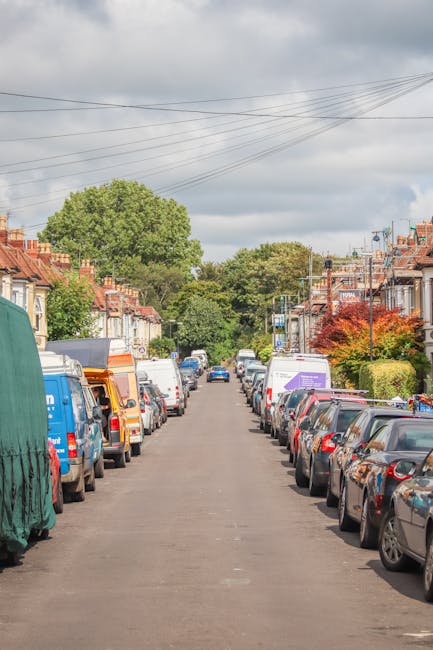
Pitshanger Lane has its own rhythm. It is residential, busy at the edges, and full of the sort of access quirks that are easy to underestimate from a quick online map. On paper, a man and van job sounds straightforward. In reality, the success of the move often depends on whether the vehicle can park safely, unload without blocking traffic, and get close enough to the front door without causing a fuss.
Tight access matters because the small things compound. If a van cannot park near the property, every box has to be carried farther. If the front path is narrow, larger items may need an extra pair of hands. If you have a basement flat, top-floor walk-up, or awkward corner entrance, the job becomes slower and physically harder. None of this is dramatic on its own, but together it can make a short move feel surprisingly long.
There is also a practical safety angle. Heavy lifting over uneven paving, repeated trips through a narrow hallway, or trying to pivot a sofa around a doorframe that is just a little too tight can lead to damage or injury. That is why careful planning is not a luxury. It is the difference between a move that flows and one that turns into a day of awkward apologies and scratched skirting boards.
Expert summary: The best tight-access moves are rarely won by brute force. They are won by measurement, timing, sensible vehicle choice, and a clear unloading plan.
How Pitshanger Lane man and van tips for tight access moves in Ealing Works
A good man and van move in a tight-access area usually follows a simple pattern: assess, prepare, park, carry, and place. That sounds obvious, but each stage matters more when the property does not offer much room to manoeuvre.
First comes the access check. This is where you look at the road layout, the width of the entrance, the height of any overhanging branches or low obstacles, and whether the van will need to stop a little way from the property. It is also the stage where you notice details like steep steps, a narrow gate, or a shared driveway that might need a careful parking arrangement.
Next is load planning. Items should be packed in a way that matches the route, not just the van. For example, if a heavy wardrobe has to be carried up a tight staircase, it should be protected and positioned so it can be handled safely by two people. A box that is "just too heavy" is one thing in a large lift. It is another thing entirely on a tight landing.
Then comes vehicle positioning. On a street like Pitshanger Lane, the aim is often to park as close as possible without blocking driveways, junctions, or pedestrian access. Sometimes the best option is not the exact doorstop position you imagined, but the safest place that still allows efficient loading and unloading. A flexible mindset helps. A lot.
Finally, the team moves in phases: bulky items first if they are most difficult to handle, fragile items separately, and loose bits and pieces last. This keeps the route clear and reduces the chance of boxes getting crushed or walked over while everyone is concentrating on the sofa.
If you are comparing service styles, it can help to read about man and van services in Ealing alongside the wider removal services available in Ealing, because the right choice often depends on how awkward the access really is.
Key Benefits and Practical Advantages
When you get tight-access moving right, the benefits show up fast. Not in a flashy way, just in that quiet relief when the job is going to plan and nobody is standing around with a half-lifted mattress wondering what happens next.
- Less time wasted: Planning the approach properly means fewer repositioning attempts and fewer delays at the kerb.
- Lower damage risk: Careful handling through narrow gaps reduces scuffs, chipped paint, and furniture knocks.
- Less physical strain: Thoughtful lifting routes and smaller load sizes are easier on everyone involved.
- Better use of the van: If the van is loaded in the right order, fewer trips and fewer awkward reshuffles are needed.
- More predictable pricing: Efficient access keeps the move more straightforward, which can help avoid overruns.
- Reduced stress: Honestly, this one matters most. A calm move feels completely different from a rushed one.
For households, renters, students, and small businesses alike, tight-access planning is about protecting time and money, but also the emotional side of moving day. Moving is already a lot. No need to make it worse by treating access as an afterthought.
If you are in the middle of packing and still gathering materials, the page on packing and boxes in Ealing can help with the practical side, while package and boxes support can be useful if you need a little more structure around the prep.
Who This Is For and When It Makes Sense
These tips are especially useful if your move involves one or more of the following:
- a flat on a narrow residential street
- shared access through a communal entrance
- limited parking or no direct driveway access
- top-floor or basement carrying
- large furniture in a small hallway
- a same-day or short-notice move
- student or single-room relocations
- office or small business items that must be moved quickly
If you are moving a fairly standard one-bedroom flat with easy parking, you may not need much more than a good schedule and decent packing. But if the property has awkward corners, tight stairwells, or a busy street outside, these tips become much more valuable.
This is also the point where people sometimes ask whether a full removals crew is overkill. Not always. If access is genuinely difficult, or if the items are fragile, heavy, or valuable, a more structured service may be the better call. For example, piano moves and other delicate items deserve more specialised planning, which is why services such as piano removals in Ealing can be the sensible choice.
And if the move is tied to a bigger property change, the local property guides at smart buying tips for Ealing property and property buying essentials may help you think ahead about access before you even get the keys.
Step-by-Step Guidance
1. Measure the awkward bits before move day
Measure door widths, stair turns, and any hallway pinch points. It sounds a bit fussy, but one minute with a tape measure can save twenty minutes of guesswork later. If a wardrobe or sofa is especially large, compare the item's widest point with the narrowest section of the route, not just the front door.
2. Identify where the van can realistically stop
Do not plan around an ideal parking space if the street does not usually allow it. Think about whether the van can stop briefly, whether loading will need to happen from a little further away, and whether a helper should be ready to carry items from the property to the vehicle. In busy parts of Ealing, the loading zone in your head may not exist in real life.
3. Pack for the route, not just the box
Use stronger boxes for books, label fragile items clearly, and keep small loose parts in sealed bags taped to the matching furniture. If something is going upstairs, make sure it is not overpacked. A box that is too heavy is not clever packing; it is just a future problem.
4. Load the van in the right order
Heaviest items should usually go in first, with fragile or awkward items protected and secured around them. Items needed first at the destination should be placed so they can be reached without unloading the whole vehicle. That tiny bit of organisation makes a difference when the access is tight and time is moving on.
5. Protect the property as well as the furniture
Corner protectors, blankets, straps, and floor covers are not over-the-top extras. They are simple ways to reduce damage on narrow paths and tight staircases. If the entrance is particularly cramped, it is worth moving slowly and using one person as a spotter. A steady pair of eyes is underrated.
6. Keep communication clear
If the van cannot park exactly where expected, the driver and movers should be able to adapt quickly. Clear instructions on where to unload, which items are priority, and which parts of the property need extra care help everything go more smoothly. It is a small thing, but it keeps everyone calm.
7. Leave a little buffer in the schedule
Traffic, parking, and access challenges rarely arrive alone. A modest time buffer reduces stress and gives you room to handle one annoying surprise without the whole day wobbling. Truth be told, most moving-day drama comes from unrealistic timing rather than the move itself.
Expert Tips for Better Results
Here is where the local, practical stuff really pays off.
Use smaller load runs if the route is tight. If the hallway or staircase is awkward, it can be better to move in more controlled batches rather than trying to carry everything at once. This is especially true for fragile furniture or anything with glass.
Pre-clear the landing and entrance. Shoes, bags, bikes, recycling bins, and random clutter can become obstacles very quickly. A clear route is safer and faster. It is one of those simple things people forget until the first box clips a basket.
Take the weather into account. A damp morning, a bit of drizzle, or a slippery step can change the feel of the whole move. Towels, mats, and dry coverings help. London weather, as ever, keeps people humble.
Keep tools within reach. A screwdriver, tape, Stanley knife, and basic furniture tools should be easy to access, not buried under a pile of boxes. When a bed frame needs quick dismantling, you do not want a treasure hunt.
Ask for a realistic vehicle match. A smaller van is sometimes better than a larger one on a narrow Ealing street. Bigger is not always better. That's just how it is.
Be honest about item weight. If something needs two people or specialist handling, say so before the day. That avoids both risk and embarrassment, which, let's face it, are equally undesirable.
Where access and item type overlap, choosing the right service matters. For example, if your move is mostly furniture-heavy, a dedicated furniture removals service in Ealing may be more appropriate than a simple one-man job. For smaller domestic moves, a flat removal service can be a good fit.
Common Mistakes to Avoid
Most tight-access moving problems are avoidable. The issue is usually not bad luck. It is a missed detail that snowballs.
- Assuming the van will park right outside: This is the classic mistake. Never rely on it unless you know the street well.
- Overpacking boxes: Heavy boxes are slower to move and harder to lift safely in cramped spaces.
- Not checking stair turns: A sofa may fit in theory and fail completely on the turn.
- Ignoring communal access: Shared entrances, neighbours, and building rules can complicate timing.
- Leaving packing to the last minute: Rushed packing often leads to poor load order and broken items.
- Forgetting a first-in, last-out plan: If you cannot reach the essentials, unpacking becomes chaos.
- Not telling the mover about obstacles: Low gates, tight lanes, and awkward parking need to be mentioned early.
One more thing: trying to "save time" by skipping preparation usually does the opposite. Small delays become bigger delays. Then everyone is tired, and somebody is carrying a lamp at a strange angle. Not ideal.
Tools, Resources and Recommendations
You do not need a truckload of equipment for a small move, but a few sensible items make a major difference:
- Strong packing boxes: use sensible box sizes, especially for books and kitchen items
- Furniture blankets: helpful for protecting corners and surfaces
- Straps and ties: keep items secure in transit
- Labels and marker pens: for room-by-room sorting
- Basic hand tools: useful for dismantling beds, tables, or shelving
- Gloves and sturdy shoes: simple protection that people often forget
- Floor protection: especially useful if access routes are narrow or dirty
Where you need more help with preparation, house removals in Ealing can support larger domestic moves, while student removals in Ealing are often the right scale for smaller, faster relocations.
If you are sorting belongings before the move, you may also want to plan what stays, what goes into storage, and what gets recycled. The page on storage in Ealing is useful if you need a short-term holding option, and recycling and sustainability is worth a look if you want to reduce waste while clearing out.
Law, Compliance, Standards, or Best Practice
For a local move in London, the main compliance concerns are usually practical rather than dramatic. The key is to move safely, avoid obstruction, and respect property and road use rules. You do not need to become a traffic lawyer overnight, but you do need to be sensible about where a van stops, how long it stays there, and whether it blocks residents, driveways, or pedestrians.
Best practice also includes insurance awareness. If you are hiring a moving service, check that the provider is clear about goods-in-transit cover, public liability, and handling processes. If you are moving items yourself, consider the risk to your own property and belongings. If something is fragile, valuable, or unusually heavy, choose the safer route rather than hoping for the best. Hope is not a lifting technique.
Professional moving work should also follow basic health and safety expectations: proper lifting methods, clear walkways, secure loading, and careful handling of awkward objects. For a transparent overview of working standards and service expectations, it can help to review health and safety policy information, insurance and safety guidance, and the terms and conditions before booking.
If pricing and payment matter to your planning, there is also useful information on pricing and quotes and payment and security. These pages can help you understand what to expect before the van even turns up.
Options, Methods, or Comparison Table
Different moves call for different setups. If access is tight, the choice of method can matter more than people expect.
| Option | Best for | Advantages | Limitations |
|---|---|---|---|
| Man and van | Small to medium moves, flexible jobs | Quick, adaptable, often ideal for tight access | May need extra planning for heavier or fragile items |
| Removal van with a larger team | Full-house or multi-room moves | More hands, more structure, better for bigger loads | May be harder to position on narrow streets |
| Same-day removals | Urgent or short-notice situations | Fast response, useful when plans change suddenly | Less time for detailed access prep |
| Storage-first approach | Staged moves or temporary space issues | Reduces pressure on move day | Requires extra coordination and possibly more cost |
In many Pitshanger Lane situations, a smaller, more agile vehicle is the better choice. If you have a narrow access point or limited parking, a compact setup can be easier to live with than a larger van that needs three careful manoeuvres and a prayer.
For urgent situations, same-day removals in Ealing may be helpful. If you want a broader picture of available services, the services overview is a good place to compare options.
Case Study or Real-World Example
A common local scenario goes like this. A couple is moving out of a first-floor flat near Pitshanger Lane. The street parking is limited, the stairwell turns sharply at the landing, and the sofa they bought online turns out to be just a bit larger than expected. Nothing dramatic, but enough to create trouble if the move is not planned well.
They start by measuring the sofa, checking the stair width, and clearing the hallway before the van arrives. The movers park a little further down the road rather than forcing a poor parking position. The sofa is wrapped, carried with a second person guiding the turn, and brought down slowly. It takes longer than a straight lift from door to van would have, but the move stays controlled, and nothing gets damaged.
The key lesson is simple: the day did not go smoothly because it was lucky. It went smoothly because the awkward parts were expected. That is what good tight-access moving looks like in real life. Not glamorous. Just effective.
Another example is a student move from a small room with a narrow stairwell and a parking-restricted street. In that case, box size matters more than volume. Smaller boxes, lighter loads, and a van that can stop briefly for loading usually create a better result than trying to make one huge trip. The work is lighter, the pace is better, and the mood is usually nicer too.
Practical Checklist
Use this before move day. It keeps the messy bits from becoming bigger than they need to be.
- Measure doors, stairs, and tight corners
- Confirm where the van can stop safely
- Tell the mover about steps, gates, and entrance width
- Pack heavy items into smaller boxes
- Label fragile boxes clearly
- Disassemble large furniture where needed
- Clear hallways, landings, and entrances
- Prepare blankets, straps, and basic tools
- Decide what goes first in the van
- Keep valuables and essentials separate
- Allow extra time for parking and carrying
- Check insurance and service terms before booking
If you are still comparing options, it may help to look at removals in Ealing and removal companies in Ealing to see which level of support suits your move. A small flat move is not the same as a full family move, and the service should fit the job.
Get a free quote today and see how much you can save.
Conclusion
Moving on Pitshanger Lane does not have to be stressful, even when access is tight. The best results come from realistic planning, sensible vehicle choice, careful packing, and a willingness to adapt when the street does not offer the exact setup you hoped for. That is really the heart of it.
If you remember nothing else, remember this: measure first, pack smart, communicate clearly, and never assume the van can park wherever you imagined. Tight-access moves are a planning game, not a guessing game. Get that part right and the rest becomes much easier.
And if the whole thing still feels like a lot, that is normal. Most people feel that way before a move. With the right approach, though, it becomes just another job done well, one box at a time, with a bit of relief at the end. Lovely, really.
![A man wearing a white shirt and black cap stands inside an open delivery van, holding a cardboard box and facing the camera. The van is filled with multiple cardboard boxes of various sizes, some wrapped in plastic or packing paper, stacked neatly inside the cargo area. The van is parked outdoors on a paved street with residential buildings visible in the background. The scene depicts a home relocation or furniture transport process, with a focus on the loading or unloading stage of a house removal. [COMPANY_NAME], specializing in removals, is involved in the logistics of this packing and moving operation, demonstrating the careful handling of items during a house move. The lighting is natural, highlighting the interior of the van and the boxes, emphasizing the logistics of tight access moves often encountered in property clearances or apartment relocations, consistent with the tips for tight access moves in Ealing across the [PAGE_TITLE].](/pub/blogphoto/pitshanger-lane-man-and-van-tips-for-tight-access-moves-in-ealing3.jpg)